Impact Story
Building Comfort and Cutting Costs: How One Ward 6 Couple Transformed Their 100-Year-Old Home
When Carey and Dave Sienicki—an architect and mechanical engineer—moved to their new DC home on Capitol Hill in Ward 6, they were eager for a lifestyle that offered greater walkability, better bike accessibility, and a shorter commute. The move even allowed them to downsize from two cars to one. But with any move comes surprises. Shortly after settling in, they found themselves bundling up indoors to stay warm and facing unexpectedly high gas and electricity bills. One of those surprises was the failure of a 5-year-old gas-fired water heater just months after they moved in. Because of their urgent need for heat, lack of familiarity with local programs, and other complications, they missed the chance to switch to an efficient heat-pump water heater—a decision they both regret.
“We wanted to make sure we set this house up for what we want to live in for the next 10 years,” Dave said. “It made imminent sense to upgrade in year-one rather than waiting for year-eight, just before moving out.”
After a rocky start, the couple knew it was time to take energy efficiency seriously and prepare their ‘new’ 100-plus-year-old home for long-term comfort and lower energy costs. They began with a self-installed Nest smart thermostat to eliminate the guesswork from managing energy use while maintaining a comfortable temperature. A $50 DCSEU rebate helped them save 20 percent off the purchase price.

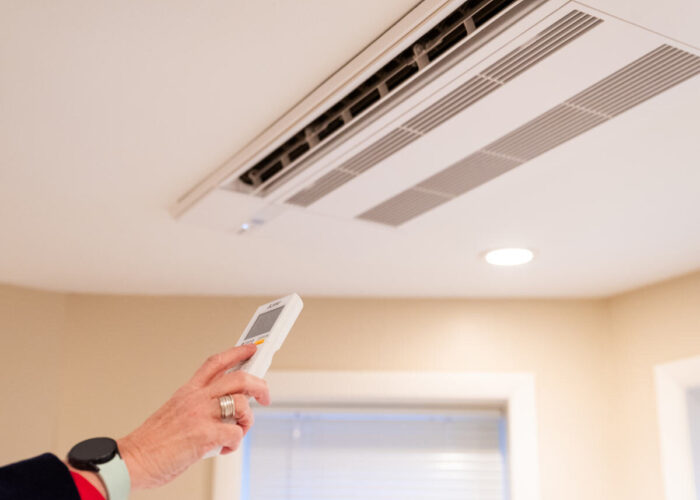
While gathering quotes to make additional upgrades to their home's energy systems, Dave and Carey attended Electrify DC's Healthy Homes Fair. It was there that they learned about DCSEU programs and rebates. They stopped by the Mitsubishi booth, where they were introduced to an alternative to the inefficient electric baseboard heating in their basement: Mitsubishi ceiling-cassette mini-split heat pumps. The air handlers sit flush with the ceiling and resemble simple vents—an appealing alternative to the wall-mounted or ducted units they had originally assumed were their only option.
“The mini splits on the wall were going to take up a lot of space,” Carey said. “The Healthy Homes Fair was something that we really got a lot of great information from and the DCSEU was also there and gave a lot of good information too.”
Before the fair, none of the contractors they contacted had mentioned ceiling cassettes, and some gave conflicting guidance. But after meeting representatives from local contractor John G. Webster at the fair, and having them assess the home, the couple learned that ceiling cassettes were not only feasible but the most energy-efficient option. Although they chose not to electrify their dual-fuel rooftop HVAC system due to costly ductwork upgrades, they proceeded with the ceiling-cassette mini-split installation. With a $1,500 DCSEU rebate, they saved nearly 8 percent on project costs, with additional tax credits from the Inflation Reduction Act expected before they expire in December 2025.
“Yes, we got the ceiling cassettes,” said Carey. “They really blend in very well with the ceiling. We don't have big, ugly mechanical units taking up valuable wall space, humming all the time. These are much quieter and more efficient.”
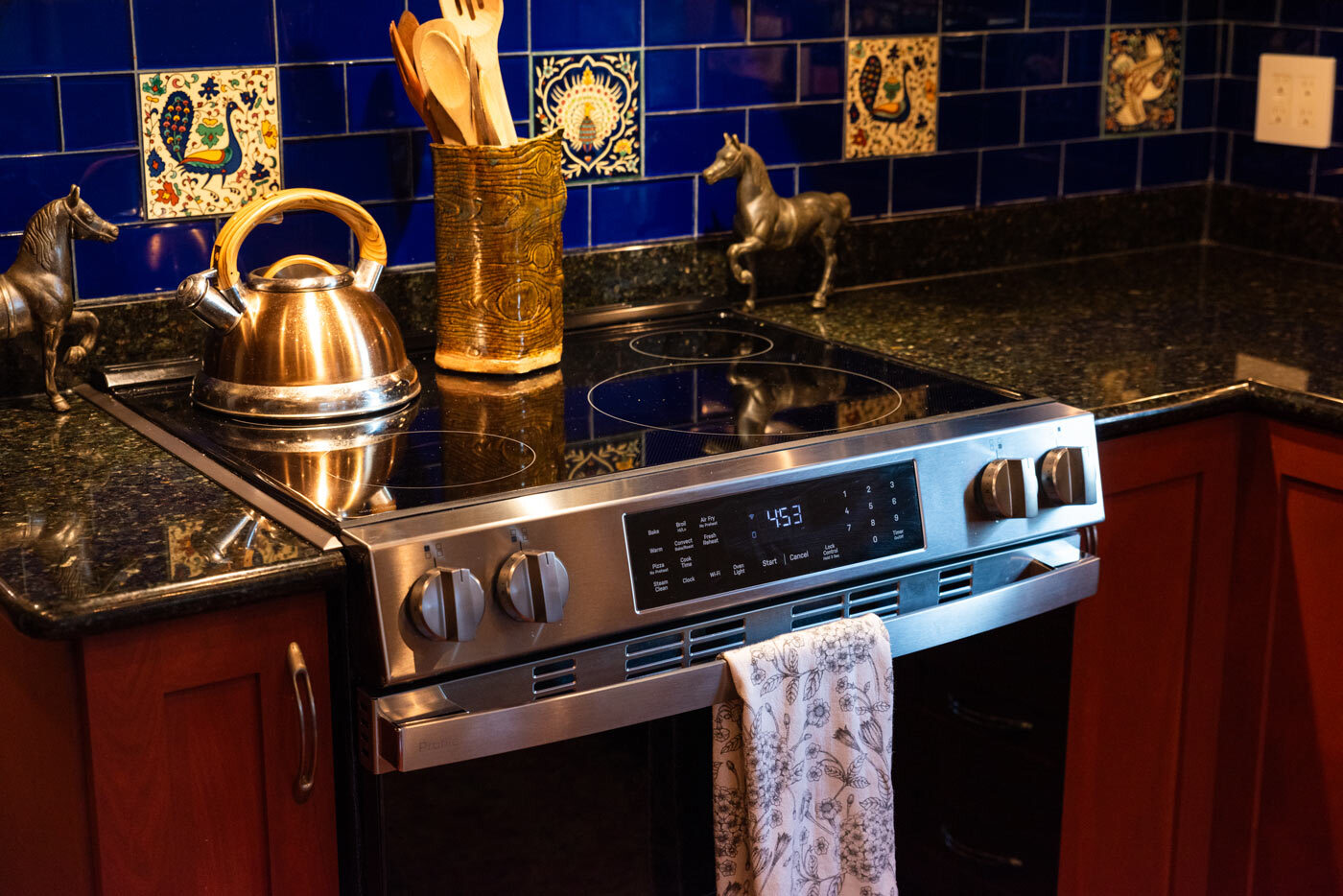
Another major improvement was replacing their troublesome 24-inch gas range—nicknamed “the flamethrower”—which struggled with temperature control, making the oven shoot up to temperatures as high as 600° F or dropping the cooktop below the required temperature, and had burners that clicked endlessly because replacement parts were discontinued. They installed an ENERGY STAR® induction range, received an $800 DCSEU fuel-switch rebate, and saved 19 percent on a project that included installation, capping the gas line, and modifying cabinetry. They have been thrilled with the results.
“The induction range is about three times faster; we can actually watch it boil,” Dave said. “There's a saying that a watched pot never boils, but in this case, you can watch it boil immediately. The induction range stovetop is amazing technology and the fact that the DCSEU offers rebates even if you’re upgrading from electric is great. It’s clearly where the future is going.”
Carey added, “If you take your pot off, it will automatically shut off. For families with children or for older adults who might forget to turn the stove off, this automatically just shuts off, which is a lot safer than accidentally leaving a gas burner on.”
Throughout the process, the Sienickis relied on information from their home inspection, DCSEU resources, Electrify DC, ENERGY STAR, and helpful YouTube tutorials. They also urge homeowners to DIY weatherize any visible gaps, switch to a smart or programmable thermostat, plan ahead instead of waiting for systems to fail, and address moisture issues early. In some areas of their home, humidity levels reached over 60%. They resolved this with an ENERGY STAR dehumidifier that covers 2,000 sq. ft. of space—supported by a $35 DCSEU rebate.
When asked what advice they would give to residents considering electrification or energy upgrades, Carey didn’t hesitate. “Do it now and enjoy it. It never gets cheaper later. If you wait until you move, you’re just doing it for the next person.”
Dave agreed. “I’m an engineer by trade. For me, it’s about dollars and cents. It just seems empirically obvious to me that we're going to get to a breakeven point for our investments in a very short period. That's not only through our utility costs, but we also get a superior quality product. I'm always motivated by these dollars and cents arguments, and what the DCSEU was offering clearly facilitated the savings that I relish as an engineer. You all have a great product and that's why we agreed to share our story. We think more people should take advantage of these programs.”