Technology, Measures & Innovation
Heat pump water heaters: Why they’re worth it
Most of us don’t think about our water heaters until they’re broken. But they can be a major source of energy and financial savings you shouldn’t overlook—especially if you switch to a heat pump water heater. Here’s what you need to know about them.
How do heat pump water heaters work?
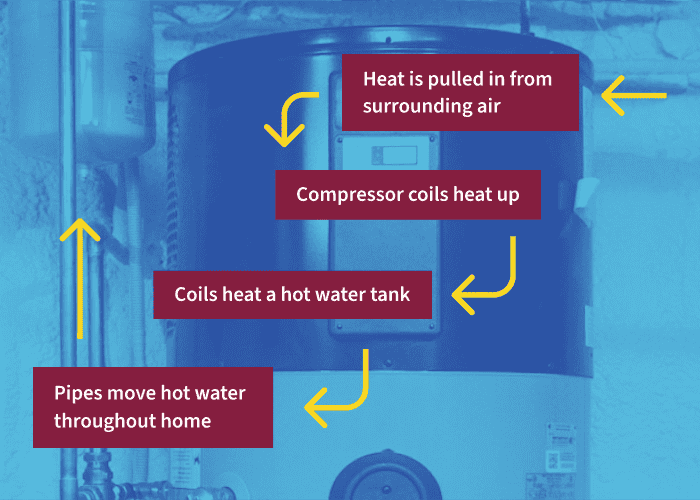
Heat pump water heaters transfer heat from the surrounding air through compressing coils into a hot water tank. Once the water inside heats up, a pipe brings it throughout your home to all your faucets and appliances. Because heat pumps move heat instead of creating it, they use significantly less energy than traditional gas or electric water heaters. The bottom line? You can enjoy lower energy bills without shortening your showers.
Why we love them
Heat pump water heaters have many benefits, including:
Lower energy bills
According to ENERGY STAR®, heat pump water heaters can use up to 70% less energy than a standard electric water heater. This means your household can save around $550 on electric bills each year.
Eco-friendly
These energy-efficient units are just as good for the planet as they are for your wallet. The New Buildings Institute ran the numbers: switching to a heat pump water heater can save more than 2,000 lbs. of CO2 emissions annually. That’s like growing more than 17 trees for 10 years.
Healthier air
Heat pump water heaters are totally electric, so they don’t create any exhaust gases like carbon monoxide. You can breathe easy with a lower fire risk and better air quality.
Sold? Here’s what to keep in mind when choosing a model
Electrical requirements
Most heat pump water heaters are 240V models, which typically require a 30-amp circuit breaker and 10-gauge electrical wire. However, they may work with as low as 20-amp circuits so they can wire directly into your electric panel. If you’re switching from gas water heaters, you’ll likely need to work with an electrician to make electrical updates to support your new model. But there are plug-in 120V heat pump water heaters on the market that can work with a standard outlet in your home. If you’re switching from an electric water heater, you’re in luck—you probably won’t need electrical updates since these usually already run on 240V.
Type
If you decide to upgrade to a heat pump water heater, you’ve got options. There are hybrid models, which can operate like traditional electric water heaters when needed, or fully heat pump-powered models. You can also choose between ductless units (aka mini-splits) or systems that take advantage of existing ductwork in your home. Once you’ve narrowed it down, check with your electrician to see what setup works for your space.
Tank size
Heat pump water heaters come in various sizes to fit your household’s needs. Just note: they’re usually bulkier than standard water heaters, so be sure to measure your space before buying.
Ready to make the switch? The DCSEU can help.
Upgrade your appliances for less with these offers.
Rebates
All District residents who manage their own home appliances are eligible for DCSEU rebates. Visit our Residential Electrification Rebates page to make sure the heat pump water heater you’re looking at is a qualifying model. Then just apply for a rebate once you make your purchase and have it installed.
Affordable Home Electrification Program (AHEP)
Income-qualified District homeowners and renters in single-family homes can upgrade gas appliances to efficient electric equipment for free. That’s right—get a heat pump water heater on us. We'll even provide a contractor to help you make the switch. Visit our Affordable Home Electrification page to learn more.