Impact Story
Sustainability and Zero Carbon Fuel the Bridge District’s First Multifamily Development
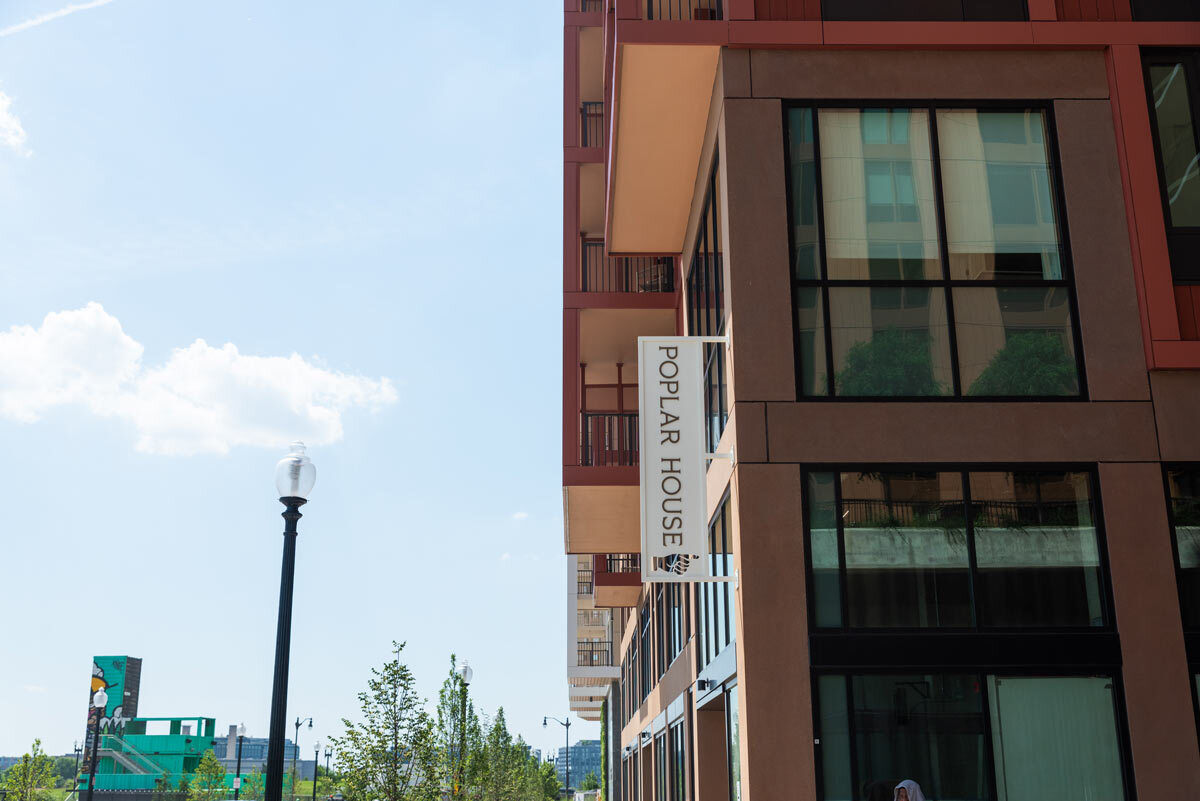
Completed in the first half of 2025, the first phase of the Bridge District marks one of Washington, D.C.’s most ambitious steps toward a zero-carbon, all-electric future. Developed by Redbrick LMD, the three new residential towers, Stratos, Poplar House, and Alula, deliver a combined 757 high-end multifamily units across two parcels of a multi-phase development that will reshape the land just off the banks of the Anacostia River and near the Frederick Douglass Memorial Bridge. Managed by Bozzuto Management Company, these buildings anchor a transformative new
neighborhood located just steps from Nationals Park, The Yards, and a 1,000-acre waterfront national park.
More than a luxury apartment offering, this first phase of the Bridge District embodies Redbrick LMD’s commitment to sustainable urban development. All three buildings are fully electric and are pursuing both LEED Platinum certification and the International Living Future Institute’s (ILFI) Zero Carbon certification. Their design targets an anticipated 30% reduction in operational energy use.
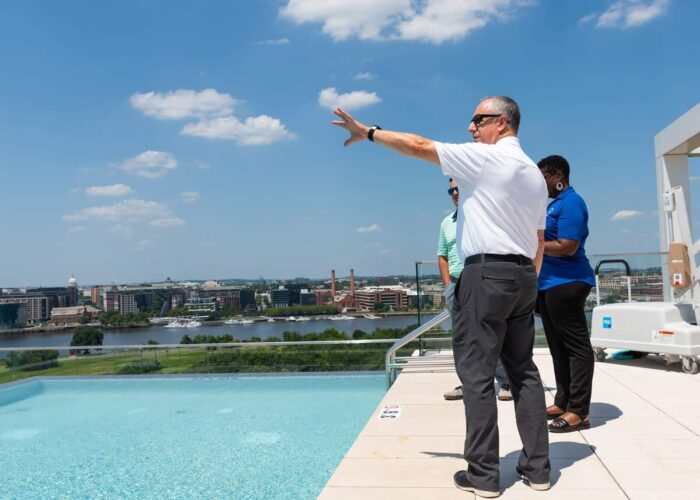
The buildings combine world-class amenities including a rooftop infinity pool and penthouse lounge, culinary hub and test kitchen, tasting rooms for craft beverages, multiple fitness facilities, a yoga studio, and expansive outdoor terraces. Also centering a design philosophy anchored in nature, resident health and wellness, and seamless access to public transit. The result is an elevated living experience that aligns resident comfort with long-term climate goals.
From the earliest planning stages, the DCSEU worked closely with Redbrick LMD to support their electrification strategy and ensure the buildings achieved deep energy savings while advancing the District’s decarbonization goals. The DCSEU provided dedicated account management and technical guidance, including engineering review and analysis of the complex HVAC, water-heating, and renewable-energy systems.
"Redbrick was pleased to be able to work with the DCSEU on this project. This was our second project with DCSEU and it’s been a seamless effort. We are looking forward to continuing our relationship with DCSEU on all of our future projects to help with our sustainability goals and objectives."
-Paul Elias, Executive Vice President, Construction, Redbrick LMD
With support from DCSEU incentives, the developer installed a suite of high-efficiency, all-electric systems. This includes heat pump DOAS (Dedicated Outside Air Systems) units with heat recovery, air-to-water and water-source heat pumps, centralized heat-pump water heating, and advanced lighting and controls. The project also incorporates an onsite 187 kW solar array with 435 panels. This system generates an estimated 223,376 kWh of clean electricity annually, saves nearly $38,000 per year, and eliminates 293,577 pounds of CO₂e emissions. Together, these measures will save 676,759 kWh of energy annually, cut operating costs by more than $600,000 each year, and deliver $6.38 million in savings over ten years. They will also avoid 4.7 million pounds of CO₂e emissions each year, equivalent to powering 447 homes or removing the emissions from 241,386 gallons of gasoline consumed. By integrating these high-impact energy measures, the Bridge District’s first towers demonstrate how DCSEU partnerships help advance all-electric, zero-carbon-ready multifamily development in the District.
The Bridge District’s first phase arrives as the District prepares to implement the Clean Energy DC Building Code Amendment Act of 2022 (D.C. Law 24-177). The law requires new covered buildings to meet a Net-Zero-Energy (NZE) standard, including onsite renewable generation and elimination of on-site fossil fuel combustion for thermal energy, and compliance with DC’s net zero energy code by December 31, 2026.

Redbrick LMD’s decision to design and construct these towers to all electric, zero-carbon-ready standards places them well ahead of upcoming regulatory requirements. Their pursuit of both LEED Platinum and ILFI Zero Carbon certification demonstrates true market leadership and provides a model for the type of innovation necessary for the District to meet its long-term climate commitments.
This leadership will continue in future phases of the Bridge District, where Redbrick plans to meet the same certification standards across additional parcels, including the development of D.C.’s first mass timber-constructed multifamily building, which will break ground in the first quarter of 2026.